written by elham amiri
There is profound weight and solace in the words “Allah is sufficient for us and He is the best disposer of affairs” (3:173) For a believer, hearing this part of the ayah solidifies the understanding that Allah alone is enough in any situation. However, those words, when uttered by a Palestinian, become a sharp reminder of my privilege and complicity. To face genocide by an unforgiving oppressor and take Allah as your representative, to hand over your power of attorney to the one whom you recognize as the best disposer of affairs and to have conviction in divine decree knowing that justice will come, is incredibly powerful. But as an American, witnessing this genocide, I wonder what I will be asked about and held accountable for given my position?
As Muslims in the West, to simply bear witness to Palestinian genocide is an abdication of full responsibility. We must also bear witness to our position as Americans or Westerners in relation to the genocide.
In The Wretched of the Earth, Frantz Fanon highlights a phenomenon that occurs in newly liberated, post-colonial states. The colonized bourgeoisie, as defined by Fanon, are a class of elite individuals educated and heavily influenced by the colonial system. In the post-colonial era, they not only replace positions of power previously held by the colonists, but continue to maintain the oppressive system. According to Fanon, the colonized bourgeoisie are decolonial only in theory; while they speak in agreement with anti-colonialism, their actions instead preserve the culture and intellectual thought of the colonizer. This phenomena results in an elite class that performs culture or anti-colonialism for approval while pawning their identity for the maintenance of an oppressive institution in order to retain their powerful positions.
In contrast, the fellah or common man feels no need to perform as they embody the struggle of the working class. Their material conditions cannot be hidden and their raw suffering, poverty, and hunger are physical manifestations of the colonial condition.
In the West, I argue that Americans occupy a position comparable to that of the colonized bourgeoisie. America is a global superpower and military hegemon, allowing us to benefit from a unique level of economic opportunities and safety. Simply holding a US passport and citizenship is a privilege, especially compared to those in the Global South. Because our socioeconomic position is so drastically different from Muslims in the global south, the way in which we interact with Muslims from the Global South is informed by our status as members of the diaspora in the West. This is especially true in our interaction with resistance movements from the Global South and the ways in which we continue to uphold Western institutions. We speak the language of liberation, freedom, and anti-colonial resistance, but our engagement within these movements can enable the very systems we claim to be against.
I believe our engagement with the Palestinian liberation movement best demonstrates this phenomenon. It is important to note that the struggle for self-determination and freedom from occupation has been ongoing for 78 years. However, since October 7th and Israel’s declaration of war on Gaza, the past three years have resulted in an unparalleled level of violence and brutality against Palestinians, fully documented by Palestinians on social media. For many people, 2023 was the first year where they were exposed to the raw reality of being Palestinian and living under Israeli occupation; social media platforms, such as Instagram and TikTok, were instrumental in capturing mainstream attention. Most of all, given the level of suppression and censorship they face, Palestinians posting online acted as a primary source, revealing the reality Western media refused to fully acknowledge.
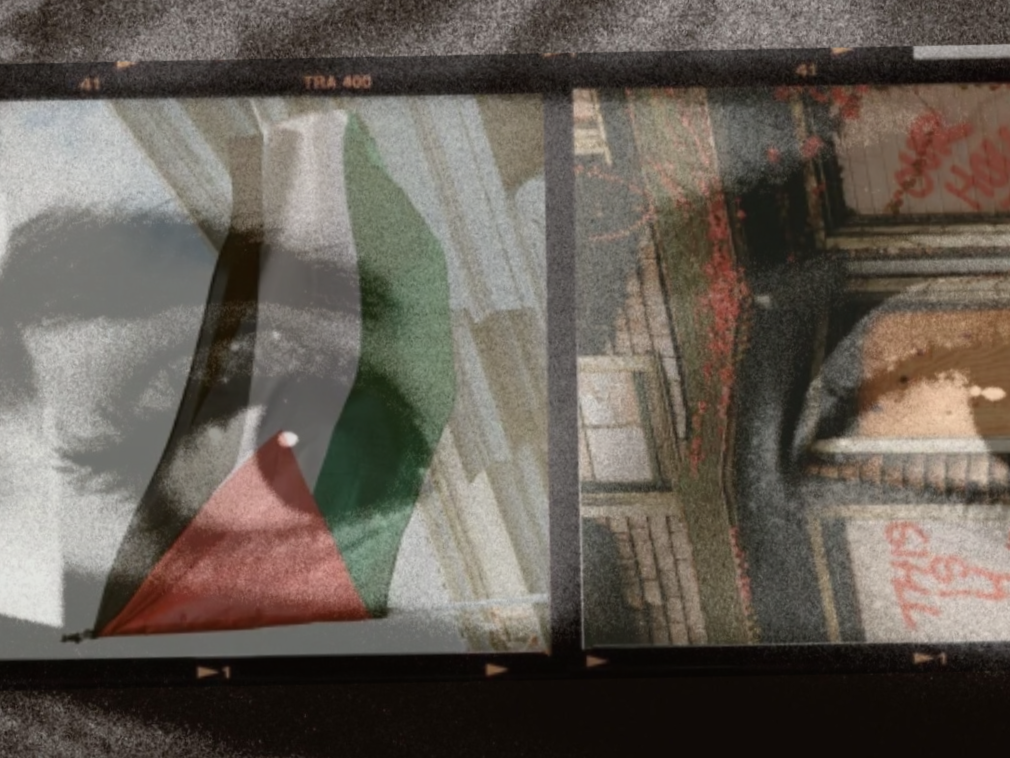
But over the past three years, I believe the online movement has changed. What once was focused on sharing information and encouraging visibility has devolved into a moral badge of solidarity and performance of activism. Through sanitization, consumerism, and aestheticizing Palestinian culture, those of us in the West consistently fail to engage with the Palestinian liberation movement in a meaningful way, instead continuing to uphold the Western systems we benefit from. The movement initially was focused on sharing images and videos from Gaza has now devolved into AI-generated infographics and a collection of symbols representing Palestine. The kuffiyeh, Palestinian flag, watermelon, olive branch, etc. are used all over social media, and while they are connected to Palestinian culture and liberation, the wide use of them with no knowledge of what they represent contributes to the aestheticization of the movement and the suppression of Palestinians’ reality. It is important to distinguish the ways in which these symbols are used between Palestinians living under occupation and those who are Pro-Palestine in the West. When Palestinians in Gaza show images of Palestinian land, culture, and history, it is an act of resistance that provides physical proof of their existence before occupation, defends against cultural erasure, and educates others on Palestinian land without the privilege of enjoying it separate from the occupation. Conversely, when those of us in the West share these images, we risk omitting its connection to the struggle for liberation, instead creating and sometimes performing a curated aesthetic of revolution. The images actually taken by Palestinian photojournalists are not always aesthetic; more often that not, they expose the destruction of Gaza and brutal violence Palestinians face under occupation. When social media algorithms already suppress Palestinian voices, choosing only to share curated infographics or palatable cultural imagery further contributes to their erasure.
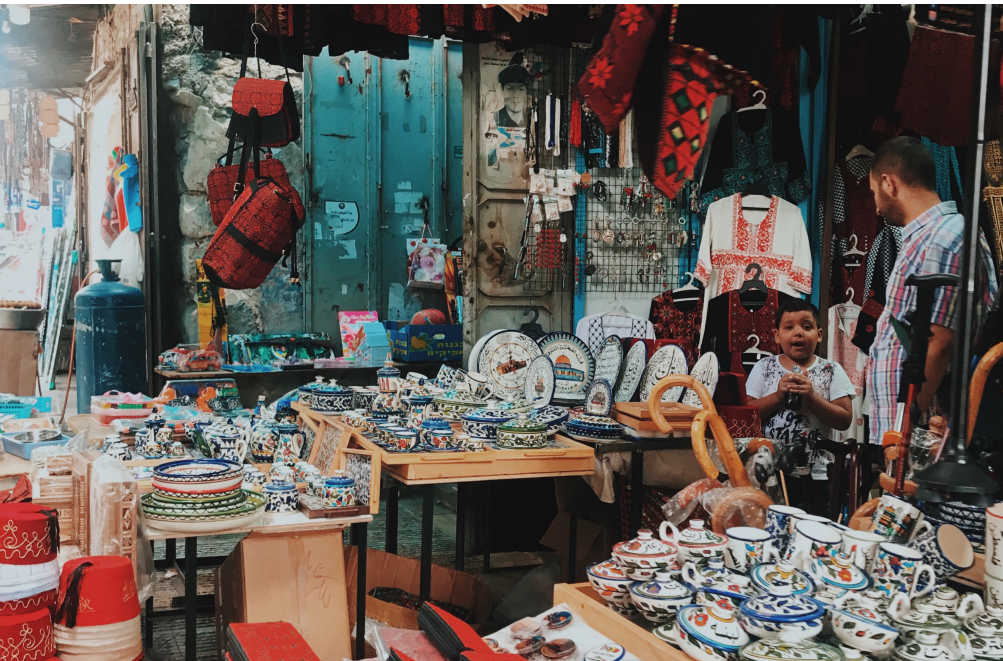
photo by aiya hammoudeh (2021)
Moreover, turning Palestine into an aesthetic allows for solidarity to become an act of consumption. We adopt cultural symbols, plastering them on material goods without context or history. These products strip the rich history of Palestinian liberation and revolutionary thought, turning it into a commodity that somehow “proves” our commitment to the Palestinian struggle. Often, it can be difficult to trace whether every product supports Palestinian artisans or creators in any way, rather than exploiting Palestinian culture for profit.
It is easy to point fingers to celebrities and companies that heavily promote consumerism and aestheticize Palestine alongside other justice movements. But as Americans, we all engage in this behavior, whether it’s buying mass produced, drop-shipped goods from vendors at Eid or Ramadan bazaars or buying from brands that promote the idea of “Donate and Shop”, where you can support the Palestinian cause through purchasing products that donate a portion of the proceeds to Palestinian organizations or charities. Not only is consumption itself an arguably-lackluster form of solidarity, but it defies the whole idea of sadaqah in Islam. We give from our wealth with no benefit or expectation of reward, not that we give so in order to gain a material good in return.
The act of blind consumerism and participating in the aestheticization is not necessarily a moral failing on our part, but a symptom of post-colonialism. It is incredibly easier to buy “Pro-Palestine” products than it is to engage with Palestinian discourse or evaluate our own position. We live within a system that aims to turn social justice movements into profit, and the quicker the movement becomes aesthetic or palatable, the easier it is to accomplish. Our guilt and cognitive dissonance don’t absolve us of our responsibility; neither does despair or feeling like meaningful contributions are impossible as an American. But products cannot be sold without consumers, and knowing that this online movement did not begin with consumerism and aesthetics, we need to shift to a more productive state.
The reality is that Palestinians exist as living examples of Western imperialism. They deal with war, occupation, militarism and are directly affected by the political decisions of the West. Like the colonized commonman, or fellah, they embody the truth, dealing with these realities without a foreign passport or proximity to western culture they can benefit from. Their struggle does not exist so that we can aestheticize, profit off of, or use as a badge of moral superiority. This holds true for several liberation and social justice movements, including those in non-Muslim countries.
In order to confront this reality, we must acknowledge that to watch a Palestinian take Allah as their wakeel or advocate, is to witness the most clear declaration of faith from an oppressed people facing relentless injustice. We are literally hearing the du’a of the oppressed on our phones while they carry the limbs of their children, look for family in the rubble, and cry out to Allah; access we have directly today when previously you would have to find it in an archive, dig through redacted government information, or watch a documentary years after the fact. Knowing this, it is simply not appropriate for us to ever witness their suffering and feel completely comfortable with passive action, nor can we allow the movement to devolve and die down. Fulfilling our duty means ensuring we don’t absorb injustice, but instead commit to an intentional and active struggle for liberation. Ultimately, to truly bear witness obligates an answer for the power we hold and action towards justice.